

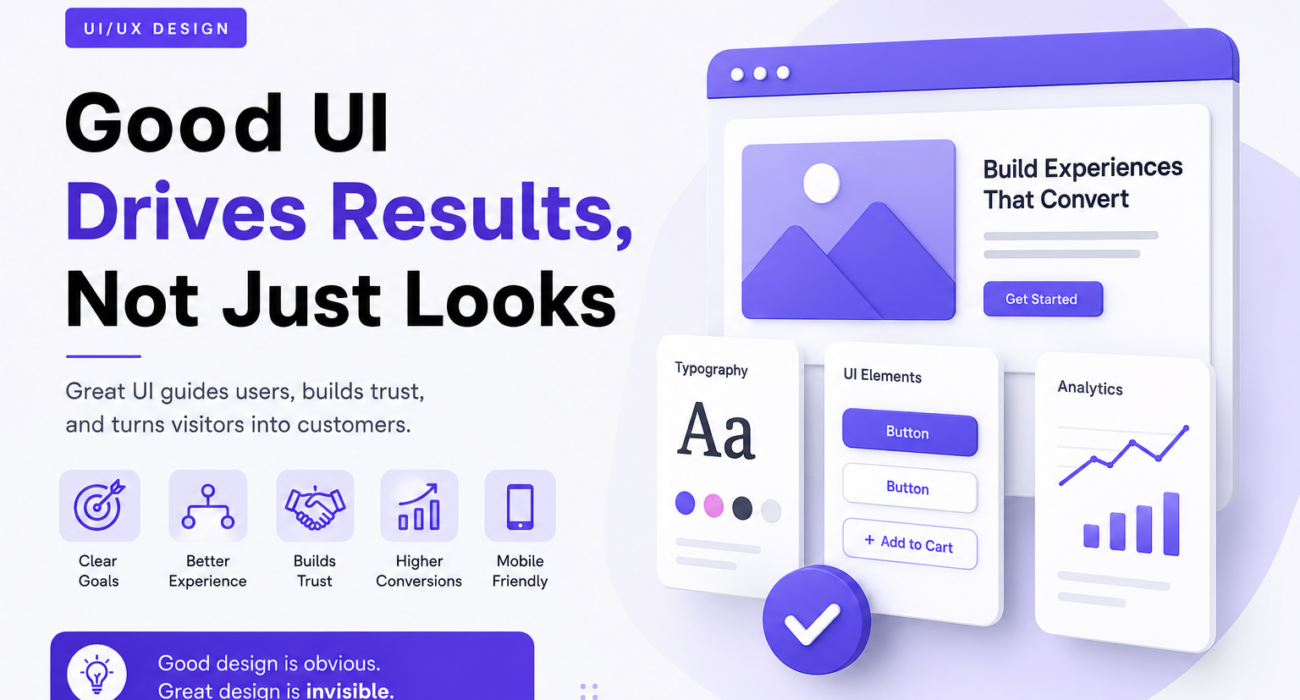
Good UI Is a Business Investment
When people think about User Interface (UI) design, they often imagine attractive colors, modern layouts, and eye-catching animations. While visual appeal matters, great UI goes much deeper than aesthetics.
A well-designed user interface helps visitors navigate your website effortlessly, find the information they need, and take meaningful actions—whether that’s making a purchase, requesting a quote, or booking a consultation.
In today’s competitive digital landscape, businesses don’t just need beautiful websites—they need websites that convert visitors into customers.
What Is UI Design?
User Interface (UI) design focuses on how users interact with your website or application. Every button, menu, form, icon, and section contributes to the overall user experience.
An effective UI should be:
- Easy to understand
- Visually organized
- Consistent throughout the website
- Accessible on all devices
- Focused on guiding users toward their goals
When users don’t have to think about how to use your website, you’ve achieved great UI.
Common UI Mistakes That Cost You Customers
Many businesses unknowingly lose potential customers because of poor interface design.
1. Too Many Calls-to-Action
When every button demands attention, users don’t know what to click.
Instead, prioritize one primary action per section.
2. Cluttered Layouts
Trying to fit everything onto one page overwhelms visitors.
Use whitespace effectively to create breathing room and improve readability.
3. Poor Typography
Small fonts, inconsistent text sizes, and low contrast make content difficult to read.
Clear typography improves both accessibility and engagement.
4. Inconsistent Design
Different button styles, colors, and spacing create confusion and reduce trust.
Consistency builds familiarity and makes navigation effortless.
5. Complicated Forms
Long forms often discourage users from completing inquiries.
Ask only for the information you truly need.
How Great UI Improves Business Performance
A thoughtfully designed interface can significantly improve your website’s performance.
Higher Conversion Rates
Clear layouts and strategic call-to-action buttons encourage visitors to take the next step.
Better User Experience
Users enjoy browsing websites that feel simple and intuitive.
Increased Customer Trust
Professional, consistent design creates credibility and confidence in your brand.
Improved Mobile Experience
With most users browsing on smartphones, responsive UI ensures a seamless experience across all devices.
Better SEO Performance
Google values websites that provide excellent user experiences, including mobile usability and engagement metrics.
UI Best Practices Every Business Should Follow
- Keep navigation simple
- Use consistent colors and typography
- Maintain clear visual hierarchy
- Leave enough whitespace between elements
- Design with mobile users first
- Highlight one primary CTA per section
- Optimize page loading speed
- Make forms quick and easy to complete
Small improvements in these areas can lead to significant gains in customer engagement and conversions.
Why UI Should Never Be an Afterthought
A website may attract visitors through SEO or advertising, but UI determines whether they stay and become customers.
Every interaction should feel effortless.
Every page should guide users toward a clear objective.
When design removes friction, businesses generate more leads, improve customer satisfaction, and increase revenue.
Final Thoughts
Good UI isn’t about adding flashy effects or following every design trend.
It’s about creating a seamless journey that helps users accomplish their goals while helping your business achieve its objectives.
If your website is difficult to navigate or doesn’t convert visitors into customers, improving your UI could be one of the highest-return investments you make.
A great interface doesn’t just look professional—it drives measurable business results.