

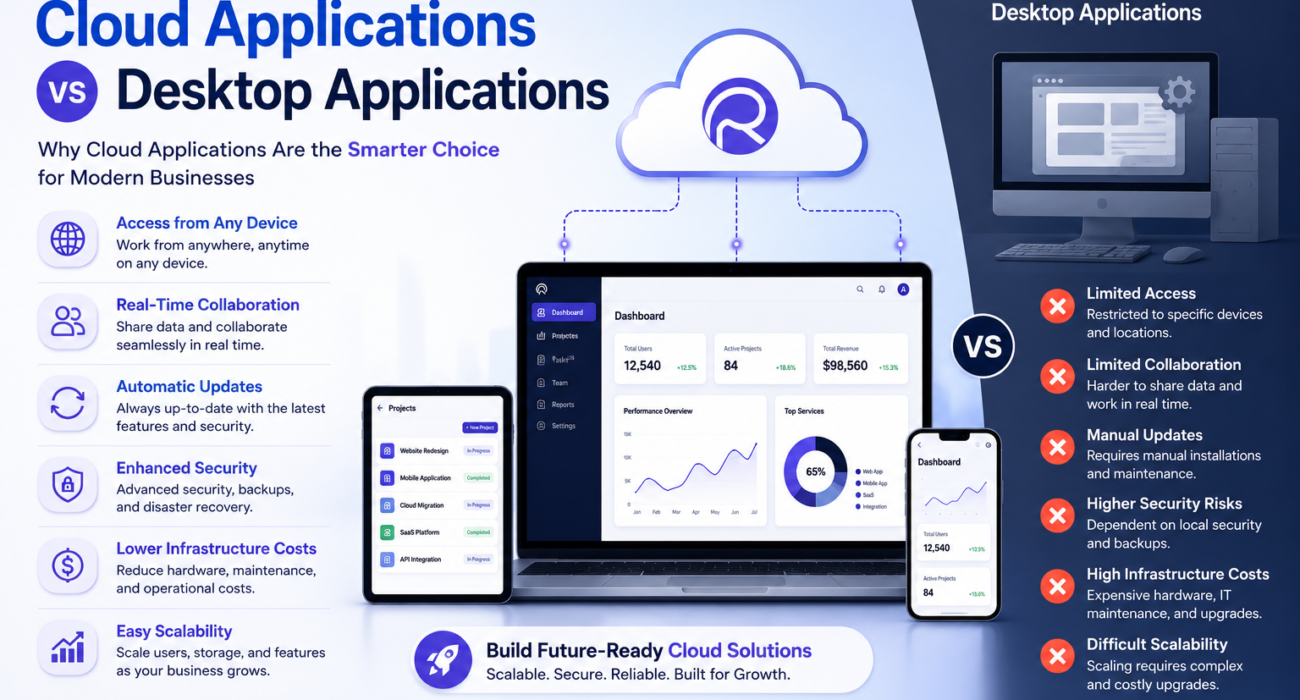
Technology continues to evolve, and businesses are constantly looking for smarter ways to improve efficiency, collaboration, and scalability. While desktop applications have served organizations for decades, cloud applications are rapidly becoming the preferred choice for modern businesses.
From startups to large enterprises, organizations are embracing cloud-based solutions to streamline operations, reduce costs, and support remote work environments.
What Are Cloud Applications?
Cloud applications are software solutions that run on remote servers and are accessed through the internet. Unlike traditional desktop applications that require installation on individual computers, cloud applications can be accessed from virtually any device with an internet connection.
Examples include CRM systems, project management tools, ERP platforms, SaaS products, and custom business applications.
Cloud Applications vs Desktop Applications
Traditional desktop applications are installed and run on local machines. While they can perform well in specific environments, they often present challenges when businesses need flexibility, collaboration, and scalability.
Cloud applications address these challenges by providing centralized access, automatic updates, and improved accessibility.
Key Benefits of Cloud Applications
1. Access From Anywhere
One of the biggest advantages of cloud applications is the ability to access your system from any location.
Whether your employees are working from the office, home, or while traveling, they can securely access business data and applications without being tied to a specific device.
2. Improved Team Collaboration
Cloud-based systems enable multiple users to work on the same data in real time.
This eliminates version conflicts, improves communication, and increases productivity across teams.
Benefits include:
- Real-time data sharing
- Centralized information
- Faster decision-making
- Better project visibility
3. Automatic Updates and Maintenance
Desktop applications often require manual software updates and installations.
Cloud applications automatically receive updates, security patches, and feature enhancements, ensuring your business always uses the latest version without downtime or additional maintenance costs.
4. Enhanced Security
Security remains a top priority for businesses.
Modern cloud solutions offer advanced security features such as:
- Data encryption
- Multi-factor authentication
- Automated backups
- Disaster recovery solutions
- Role-based access control
These measures help protect sensitive business information while minimizing risks.
5. Lower Infrastructure Costs
Traditional software often requires expensive servers, hardware upgrades, and IT maintenance.
Cloud applications reduce these costs by eliminating the need for extensive on-premise infrastructure.
Businesses can focus their resources on growth rather than technology maintenance.
6. Easy Scalability
As your business grows, your software should grow with it.
Cloud applications make it easy to:
- Add new users
- Increase storage capacity
- Expand system functionality
- Integrate with other business tools
This flexibility ensures that your technology supports future business growth.
7. Better Business Continuity
Unexpected events such as hardware failures, power outages, or natural disasters can disrupt operations.
Cloud-based solutions store data securely in remote environments, allowing businesses to recover quickly and maintain continuity even during unexpected situations.
When Should Businesses Move to the Cloud?
Organizations should consider cloud migration if they:
- Support remote or hybrid teams
- Need better collaboration tools
- Experience frequent software maintenance issues
- Want to reduce IT infrastructure costs
- Plan to scale operations in the future
- Require improved security and backup solutions
The Future Is Cloud-First
The modern business landscape demands flexibility, speed, and efficiency. Cloud applications provide the foundation for businesses to innovate, collaborate, and grow without the limitations of traditional desktop software.
Companies that adopt cloud technology today position themselves for greater agility and long-term success.
Final Thoughts
Cloud applications are no longer just an alternative to desktop software—they are becoming the standard for modern businesses.
By offering improved accessibility, enhanced security, lower costs, and seamless scalability, cloud solutions empower organizations to operate more efficiently and stay competitive in a rapidly evolving digital world.
If you’re considering building a custom cloud application, migrating an existing system, or developing a scalable SaaS platform, investing in cloud technology can be one of the most valuable decisions for your business.