

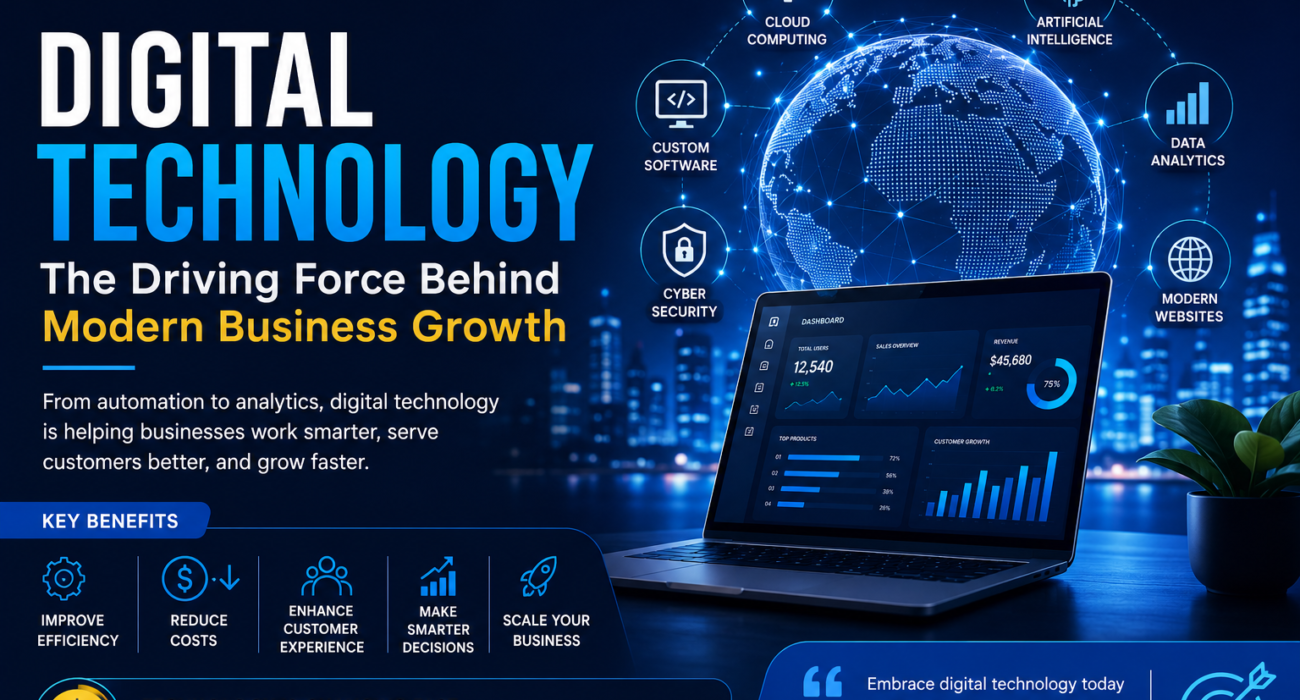
In today’s fast-changing business landscape, digital technology is no longer a competitive advantage—it’s a necessity. Companies of every size are embracing digital solutions to improve efficiency, reduce costs, enhance customer experiences, and stay ahead of the competition.
From artificial intelligence and cloud computing to custom software and modern websites, digital technology is transforming how businesses operate.
The question isn’t whether your business should adopt digital technology—it’s whether you can afford not to.
What Is Digital Technology?
Digital technology refers to tools, platforms, and systems that use digital processes to solve business challenges and improve productivity. These technologies enable businesses to automate operations, analyze data, communicate effectively, and serve customers more efficiently.
Instead of relying on manual processes, organizations can streamline workflows and make smarter, data-driven decisions.
Why Digital Technology Matters
Businesses that embrace digital transformation enjoy significant advantages, including:
- Increased productivity
- Lower operational costs
- Faster decision-making
- Better customer experiences
- Improved collaboration
- Greater business scalability
- Enhanced security and compliance
Technology isn’t replacing people—it’s helping teams work smarter and focus on higher-value tasks.
Key Digital Technologies Driving Business Growth
1. Artificial Intelligence (AI)
AI is changing the way businesses operate by automating repetitive tasks, improving customer service, and generating valuable insights from data.
Popular AI applications include:
- AI chatbots
- Customer support automation
- Content generation
- Predictive analytics
- Sales forecasting
AI allows businesses to save time while delivering faster and more personalized customer experiences.
2. Cloud Computing
Cloud technology allows businesses to access applications and data from anywhere in the world.
Benefits include:
- Remote access
- Automatic backups
- Improved collaboration
- Lower infrastructure costs
- Easy scalability
Cloud-based systems are ideal for businesses with remote teams or multiple locations.
3. Data Analytics
Data is one of the most valuable assets a business owns.
Analytics tools help organizations understand:
- Customer behavior
- Sales trends
- Marketing performance
- Operational efficiency
With better insights, businesses can make confident decisions instead of relying on guesswork.
4. Custom Software Development
Every business has unique processes.
Custom software is designed specifically around those workflows, eliminating unnecessary features while improving productivity.
Examples include:
- CRM systems
- Inventory management
- Appointment booking platforms
- POS software
- Internal business portals
Unlike generic software, custom solutions grow alongside your business.
5. Modern Business Websites
A website is no longer just an online brochure.
It’s often the first impression potential customers have of your business.
A modern website should be:
- Fast loading
- Mobile responsive
- SEO optimized
- Secure
- Easy to navigate
- Conversion focused
An effective website works 24/7 to generate leads, build trust, and support your marketing efforts.
6. Cybersecurity
As businesses become more digital, protecting sensitive information becomes increasingly important.
Strong cybersecurity measures help safeguard:
- Customer data
- Financial information
- Business operations
- Company reputation
Investing in cybersecurity reduces the risk of costly data breaches and downtime.
Common Challenges Businesses Face
Many businesses delay digital transformation because they believe it’s too expensive or complicated.
Common concerns include:
- Legacy systems
- Budget limitations
- Lack of technical expertise
- Resistance to change
However, adopting digital technology doesn’t require changing everything at once.
Start with solutions that solve your biggest business challenges and expand gradually.
How to Begin Your Digital Transformation
If you’re just getting started, consider these steps:
- Assess your current processes.
- Identify repetitive manual tasks.
- Prioritize technologies that offer immediate business value.
- Invest in a modern website or custom software where needed.
- Train your team and monitor results.
- Continue improving as your business grows.
Small, strategic improvements often lead to significant long-term gains.
The Future Belongs to Digital Businesses
Technology continues to evolve, bringing new opportunities for businesses willing to innovate.
Companies that embrace digital transformation today will be better positioned to:
- Respond quickly to market changes
- Deliver exceptional customer experiences
- Increase operational efficiency
- Scale with confidence
- Stay competitive in an increasingly digital world
Digital technology isn’t simply about adopting the latest tools—it’s about using technology to solve real business problems and create lasting value.
Final Thoughts
Digital technology has become the foundation of successful businesses. Whether it’s AI, cloud computing, custom software, cybersecurity, or a high-performing website, the right technology investments can drive growth, improve efficiency, and strengthen customer relationships.
Businesses that adapt today will be the ones leading tomorrow.
If you’re planning your digital transformation journey, start by identifying where technology can create the biggest impact—and take one step at a time.
Ready to Future-Proof Your Business?
At Riiventra, we help businesses embrace digital technology through modern websites, custom software, cloud applications, and scalable digital solutions tailored to their unique goals.
Whether you’re modernizing an existing system or building something entirely new, our team is ready to help you turn ideas into technology that drives results.